_edited.png)

Golf Apparel Sizing Guide for a Better Fit

A polo that pulls across the chest on your backswing or shorts that sit awkwardly by the back nine can ruin a good round faster than a lip-out. A proper golf apparel sizing guide helps you avoid that kind of gear regret and build a wardrobe that looks sharp, moves properly and feels right from the first tee to post-round knock-offs.
Golf clothing sits in a slightly different lane to everyday gear. You do not want it skin-tight like gym wear, but you also do not want excess fabric bunching up through your swing. The sweet spot is a fit that gives you room to rotate, bend and walk 18 without feeling restricted or sloppy.
How a golf apparel sizing guide should work
The best place to start is not the number on the tag. Sizes can shift between brands, cuts and even fabric types, so a medium in one polo may feel closer to a large in another. That is why a golf apparel sizing guide should be read as a fit tool, not a guess.
Start with your actual measurements. Chest, waist and hip measurements will tell you far more than your usual size habit. If you are between sizes, think about how you wear your golf gear. If you like a cleaner, closer look, your usual size may be right. If you prefer more room through the shoulders or thighs, sizing up can make more sense.
Fabric matters too. Stretch blends are more forgiving and tend to move with you, while structured cotton-heavy pieces may feel firmer through the chest, arms or waist. A relaxed cut with stretch can fit very differently from a slim cut with no give, even if the tagged size is identical.
Getting the fit right by product type
Polos
A golf polo should sit neatly on the shoulders without the seam dropping too far down the arm. The chest should feel comfortable, not painted on, and you should be able to turn through your swing without the fabric pulling across your upper back.
Length is where plenty of golfers get caught. Too short and it rides up every time you address the ball. Too long and it starts looking more like a nightie than a golf shirt. A good polo length should cover the waistband comfortably and still look tidy untucked if that is how you wear it off course.
Sleeves should finish around the mid-bicep area for most builds. If they flare out too much, the shirt can look oversized even when the chest fits well. If they grip the arm too tightly, size alone may not be the issue - the cut might just not suit your build.
1/4 zip pullovers
A pullover needs enough room to layer over a polo without feeling bulky. That usually means checking the chest and shoulder fit first, then making sure the sleeves are long enough through your address position. If the cuffs pull back too far when you grip the club, it is a sign the fit is too short or too narrow through the upper body.
This is one area where personal preference plays a bigger role. Some golfers want a more athletic fit for a cleaner silhouette, while others prefer a little extra room for layering on chilly mornings. Neither is wrong. The key is making sure the fabric does not bunch around the midsection or restrict shoulder turn.
Shorts and pants
Waist size is the obvious starting point, but it is not the whole story. Golf shorts and pants also need to work through the seat and thighs, especially if you walk the course or prefer a more active fit. If the waist fits but the fabric catches when you crouch to read a putt, you probably need more room through the leg rather than a bigger waist.
Length matters as well. Shorts that are too long can throw off the whole look and feel heavy, while shorts that are too short may not suit every setting or personal style. For most golfers, a cut that finishes just above the knee gives the most versatile result.
With pants, pay attention to taper. A very slim lower leg can look sharp, but if it is too narrow it can feel restrictive by the calves and ankle. A cleaner straight or lightly tapered cut tends to give you more flexibility between on-course wear and everyday wear.
Caps, hats and socks
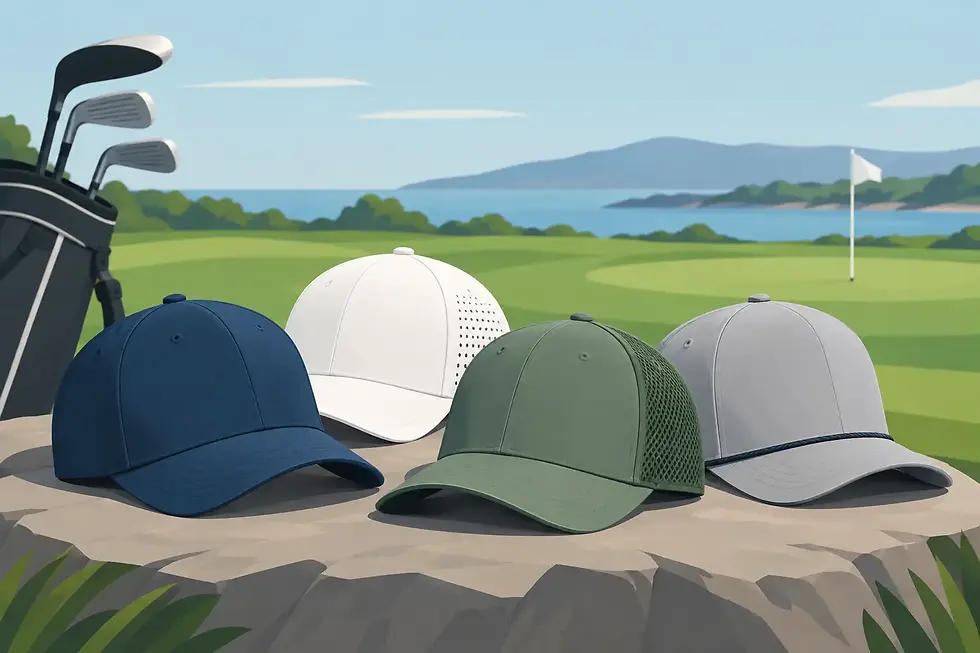
Accessories still need the right fit. Caps should sit comfortably without pinching your forehead by the turn. If you are adjusting the strap to the absolute limit either way, the shape probably is not right for your head.
Socks are less complicated, but the wrong size can still create bunching, slipping or pressure points. If you spend hours walking in them, comfort is not a small detail.
Common sizing mistakes golfers make
One of the biggest mistakes is buying for the size you wish you were rather than the fit that actually works. No one wins from a polo straining at the buttons or shorts that need a pep talk to get done up.
Another common miss is assuming all golf gear should fit loose. That old-school baggy look might have had its era, but too much fabric can get in the way and look untidy. On the flip side, going too fitted can be just as awkward, especially if you are reaching, rotating and moving all round.
There is also the off-course trap. A lot of golfers want clothing that works beyond the fairway, which makes sense. But everyday styling should not come at the cost of on-course comfort. The best fit handles both - smart enough to wear out, comfortable enough to swing freely.
How to measure yourself without making it a drama
You do not need a tour caddie or a tailor on standby. A soft measuring tape and two minutes will do the job. Measure your chest around the fullest part, keeping the tape level. For waist, measure where your shorts or pants naturally sit, not where you think they should sit after a strong week of salads. For hips, measure the fullest part around the seat.
If you are shopping for tops, shoulder width and body length can help if you often find shirts too tight up top or too short through the hem. For bottoms, inseam is useful if standard lengths never quite land right.
It also helps to compare those numbers to a garment you already own and rate highly. If your favourite golf polo fits like a dream, lay it flat and check the key dimensions. That gives you a more practical benchmark than relying on memory alone.
Fit preferences are personal - and that is the point
Some golfers want their apparel crisp and athletic. Others lean towards a more relaxed weekend comp feel. Neither approach is better. What matters is choosing pieces that match your build, your style and how you actually wear them.
If you are broad through the shoulders, you may need to prioritise chest and upper-arm room in polos and pullovers, even if that means a slightly looser waist. If you have stronger thighs from plenty of walking or gym work, shorts and pants with a bit more shape through the leg will usually feel better than simply sizing up in the waist.
This is where a brand with a lifestyle-led range can make things easier. If your wardrobe moves between the course, the clubhouse and everything after, fit should support that. Clean lines, easy movement and a bit of personality beat stiff, overbuilt gear every time.
When to size up and when not to
Sizing up makes sense when a garment is clearly restrictive through your movement points - shoulders, chest, seat or thighs. It can also work if you plan to layer underneath, especially with pullovers or cooler-weather gear.
But sizing up is not a magic fix for a bad cut. If the shoulders are dropping, the sleeves are too long and the body looks boxy, a larger size is probably just making the wrong shape more obvious. In that case, the answer is a different fit, not a bigger number.
The same goes for sizing down. A trimmer fit can look polished, but if it compromises comfort or movement, it is not the right call. Golf apparel should work with your round, not test your patience by the fifth hole.
The best fit is the one you forget about
When your golf gear fits properly, you stop thinking about it. You are not tugging at hems, adjusting waistbands or wishing you had chosen differently after nine holes in the sun. You just get on with the day, look the part and feel comfortable doing it.
That is really what a good fit comes down to. Not chasing a number, not forcing a trend, just choosing apparel that gives you room to move and enough polish to wear confidently anywhere golf takes you. If a piece feels right in the mirror and even better in motion, you are on the right line.


Comments