_edited.png)

Sun Safe Golf Outfit Guide for Summer Rounds

A 7:30am tee time can still leave you looking like you spent the day in a bunker by the turn. This sun safe golf outfit guide is built for the Australian golfer who wants to stay protected through a full round without dressing like they are headed to a hiking expedition.
The goal is not to pile on heavy layers or sacrifice your swing for coverage. It is to choose pieces that manage heat, shield the skin you actually expose, and still look sharp when the post-round chat runs longer than planned.
Start with the fabric, not the forecast
A cloudless forecast is an obvious cue to dress for the sun, but UV can be high even when the sky looks harmless. Your polo, shorts and hat form the base of your protection, so fabric deserves more thought than simply grabbing the lightest thing in the drawer.
Look for breathable performance fabrics that move moisture away from the skin and dry quickly. A damp cotton shirt may feel fine on the first tee, but it can get heavy once the temperature climbs and sweat builds. Technical blends are usually the better play for long rounds because they keep air moving and maintain their shape through 18 holes.
Where a garment has an advertised UPF rating, that is a useful extra layer of confidence. UPF-rated fabric is tested for how much ultraviolet radiation it allows through. It does not replace sunscreen on exposed areas, but it makes your shirt or long sleeve more than just a style choice.
Colour comes with a trade-off. Darker colours often hide sweat better, while lighter shades can feel cooler in direct sun. There is no automatic winner. If you run hot, a lighter, airy polo may be your go-to. If a visible sweat patch is your personal double bogey, choose a darker colour in a quick-drying fabric and prioritise ventilation.
Build a sun safe golf outfit from the top down
Your head, face, neck and ears receive a serious amount of sun on the course. Start there, then work down.
Choose a hat that earns its spot in the bag
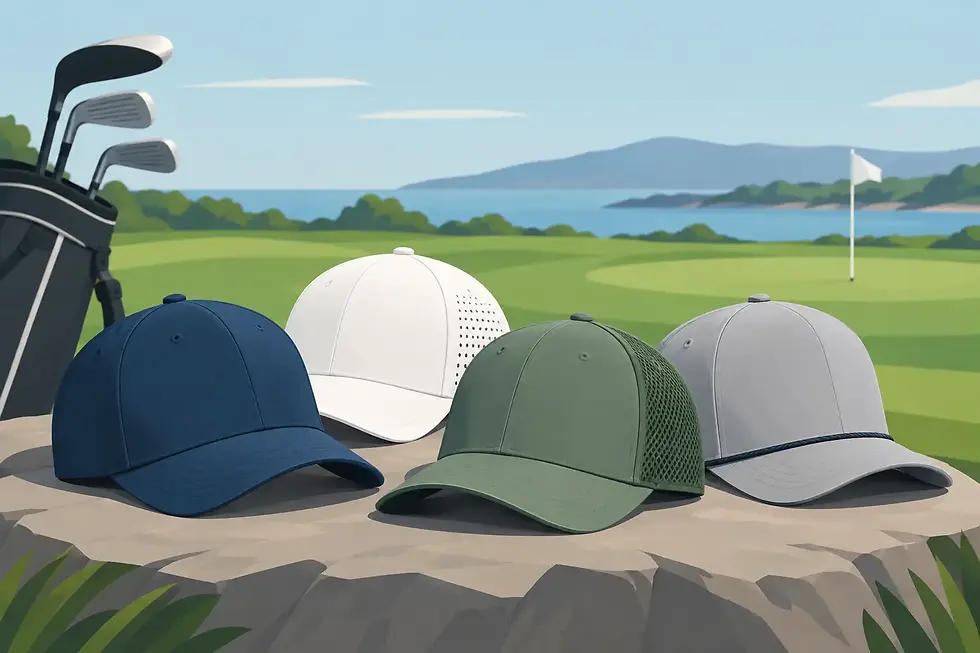
A standard golf cap is a classic for good reason. It shades the eyes and keeps your face clear for putts, while offering a clean, easy-to-wear look. The catch is that a cap leaves your ears and neck exposed. On a mild morning or a short nine-hole hit, that may be a reasonable compromise. For a summer round with no shade in sight, it is worth considering more coverage.
A bucket hat with a proper brim offers shade around the face and ears while keeping the relaxed golf look intact. A wider-brim hat offers still more protection, particularly for the neck, though you will want to make sure it sits securely and does not become a distraction in the wind or during your swing.
Whichever style you choose, make it part of the routine rather than an accessory you remember on the 10th. Keep a spare in the car or your golf bag. A cap or hat that has been crushed under wet towels and old scorecards is unlikely to see much action.
Pick sunnies made for movement
Sunglasses do more than reduce squinting into the fairway. Quality lenses with UV protection help protect your eyes, and a good fit makes it easier to track a ball against bright sky or read subtle changes on the green.
For golf, avoid frames that slide down your nose when you sweat or pinch behind the ears after an hour. Polarised lenses can reduce glare from water, carts and shiny surfaces, but some golfers find they affect how they read certain screens or visual cues. Try them in real conditions before making them your permanent course pair.
Cover your torso without overheating
A short-sleeve polo is the familiar answer, and a breathable one is ideal for many rounds. When UV is extreme, though, a lightweight long-sleeve layer can be the smarter choice. It covers the arms, avoids the sticky feeling of repeatedly applying sunscreen over body hair, and can feel surprisingly cool if the fabric is designed to breathe.
This is where layering works. Wear a comfortable polo and pack a lightweight quarter zip or long-sleeve top for the exposed stretches of the day. Do not treat a thick winter pullover as sun gear. If it traps heat, you will take it off before the third hole and be back where you started.
Give legs and feet some thought
Golf shorts are hard to beat in hot weather, but they leave plenty of skin in the sun. Apply broad-spectrum sunscreen generously to calves and knees before you leave home, then reapply during the round. Do not forget the backs of your legs when you are riding in a cart or standing over a putt for longer than you would like.
Lightweight golf pants can be a better option on days when you want full leg coverage, especially if the material has stretch and breathability. The right pair should not feel restrictive during a full turn or when lining up a ball from an awkward lie. If they do, they belong in the clubhouse rotation, not your summer kit.
For socks, favour a comfortable performance pair that manages moisture and provides enough coverage at the ankle. Blisters are not technically sun damage, but overheated, sweaty feet can wreck a round just as efficiently.
Sunscreen is part of the outfit
A good outfit supports sun protection. It does not replace it. Use a broad-spectrum, water-resistant sunscreen with SPF 50+ on every exposed area, including your face, neck, ears, forearms, hands and legs. Apply it before heading out, rather than trying to do a rushed job on the first tee.
Reapplication is where most golfers fall apart. The turn is a handy reminder, but if you are sweating heavily or towelling off often, do it sooner. Keep a sunscreen stick in the bag for your face and ears, plus a regular bottle for arms and legs. It is more likely to get used if it is as easy to reach as a ball marker.
Pay attention to hands. They cop sun while gripping the club, driving the cart and fishing balls out of every pocket. If you wear one glove, the other hand is especially easy to miss. Sunscreen can make grips feel slippery, so let it absorb properly before you start swinging and use a towel to keep your hands dry.
Make comfort a performance advantage
Sun safety and good golf are not competing priorities. Heat, glare and dehydration wear down concentration, which is why the outfit that feels great on the practice green can become a problem by the back nine.
Choose a fit that gives your shoulders room to rotate and your waistband room to move. Slim is fine; restrictive is not. A collar that keeps its shape can provide a little extra neck coverage, while breathable underwear and socks help prevent the kind of irritation that has you thinking about anything but the next shot. Even the best-looking kit is no help if you are constantly tugging, adjusting or overheating in it.
Keep a lightweight towel handy to dry sweat, rotate gloves if you use them, and drink water early rather than waiting until you feel thirsty. These are not glamorous moves, but neither is losing your focus over a three-foot putt because the sun has cooked you all afternoon.
A practical summer-round checklist
Before you zip up the bag, make sure you have the essentials sorted:
A breathable polo or lightweight long-sleeve top, ideally with UPF protection where stated
A secure cap, bucket hat or wider-brim hat suited to the conditions
UV-protective sunglasses that stay put while you swing
SPF 50+ broad-spectrum sunscreen for application and reapplication
A water bottle, towel and a spare pair of dry socks for particularly sweaty days
4ORE Golf gear is made for bringing personality to the course, so there is no reason your sun-ready fit has to look like an afterthought. Build around colours and pieces you will genuinely wear, then add the practical protection that lets you stay out there comfortably.
The best sun-safe outfit is the one you will wear from the first tee to the final handshake: cool enough to move in, covered where it counts, and ready for whatever the Australian sun decides to do.


Comments