_edited.png)
Golf Shorts Fit Guide for a Better Round

A good pair of golf shorts should disappear once you tee off. No waistband digging in as you bend to read a putt, no fabric pulling through your backswing, and no awkwardly baggy legs flapping around when the wind picks up. This golf shorts fit guide covers the details that separate a pair you tolerate from the ones you reach for every Saturday.
The right fit is not about squeezing into the smallest number on the tag or going oversized for extra room. It is about a clean shape that moves easily, looks sharp at the clubhouse and holds up from the first tee to the post-round feed.
Start with the waist, not the label
Your waist measurement is the best place to start, but fit always matters more than the number. Golf shorts should sit comfortably around your natural waist or just below it, depending on where you normally wear your trousers. They should feel secure without needing your belt to do all the heavy lifting.
A useful test is to fasten the shorts, then slide two fingers between the waistband and your body. If you cannot fit them in, the waist is likely too tight. If you can fit a whole hand in there, you will spend the round hitching them up after every drive.
Do not judge the waist only while standing still in front of the mirror. Sit down, crouch to line up an imaginary putt and make a few practice swings. A waistband that feels fine in your bedroom can turn into a proper nuisance once your core starts rotating.
If you sit between sizes, the fabric blend makes the call. Shorts with comfortable stretch can usually work in the smaller size if the waist is not restrictive. A firmer, more structured fabric may feel better with the extra room. A belt should refine the fit, not rescue it.
The seat should move with you
The seat is where plenty of otherwise decent shorts lose the plot. Too tight and the fabric pulls across the back when you bend or squat. Too loose and the shorts sag, bunch and look more backyard barbecue than golf day.
A well-fitted seat follows your shape without clinging. You should be able to walk a full stride, bend to pick up a ball and rotate through a swing without feeling tension across the back or inner thigh. Check for horizontal pulling lines across the seat - they are a reliable sign that you need more room.
Your body shape matters here. If you have stronger quads or glutes, do not assume a larger waist size is the only answer. Look for shorts cut with some room through the seat and thigh, ideally with stretch built into the fabric. Going up several waist sizes can create a loose waistband while still failing to solve the real issue.
Give your thighs enough room
Golf puts your lower half to work, especially when you are walking the course, navigating slopes or setting a stable base through impact. Shorts should skim your thighs, not grip them.
Pinching at the leg opening, fabric riding up between shots or pockets pulling open are all signs the thigh fit is too narrow. On the other hand, a very wide leg can look sloppy and catch the breeze. Aim for a relaxed line with enough space to move, rather than a skinny cut or a full-on board-short silhouette.
This is one place where personal preference genuinely comes into it. Some players like a trimmer look; others want extra breathing room. The non-negotiable is movement. If the shorts limit your setup or distract you during the swing, they are not the right pair, no matter how tidy they look on the hanger.
Golf shorts length: where should the hem land?
For most golfers, the sweet spot is a hem that lands just above the knee or around the top of the knee. It is modern, versatile and works with golf shoes, socks and a polo without looking too formal or too casual.
A shorter inseam can suit a more athletic build and hot Australian rounds, particularly if you prefer a sharper, current shape. Just make sure the hem does not ride too high when you sit in a cart or bend to mark a ball. If you are taller, a slightly longer length can provide better proportion and prevent the shorts from feeling like they have shrunk in the wash.
Longer shorts are not automatically more flattering. Once the hem drops well below the knee, it can shorten the look of your legs and create excess fabric around the knee when you walk. There is a difference between relaxed and oversized, and the golf course tends to make that difference obvious.
Put stretch to work, without going too soft
Stretch is a mate on the course. A little give in the fabric makes it easier to rotate, squat and walk without constantly noticing what your shorts are doing. It is especially useful if you play regularly, walk 18 holes or prefer a closer fit through the thigh.
But more stretch is not always better. Extremely soft, overly flexible fabric can lose its shape over the day, particularly around the seat and knees. The best golf shorts balance mobility with enough structure to keep a clean silhouette after a few hours, a few snacks and perhaps one or two trips into the trees.
When trying them on, pull the fabric gently at the thigh and seat. It should give without feeling thin or flimsy. Then return to shape rather than staying stretched out. That recovery is what helps your shorts look as good on the 18th as they did on the first.
Use movement checks before committing
A mirror tells you part of the story. Your golf stance tells you the rest. Before settling on a fit, run through a few practical checks:
Take a full practice swing in both directions, paying attention to the waistband, seat and inner thigh.
Sit down for a minute to see whether the waistband pinches or the hem pulls too high.
Squat as if you are reading a low putt, then stand up to check whether the shorts ride up.
Put your mobile, wallet and a couple of tees in the pockets to make sure they sit flat and do not drag the shape out.
These small tests are more useful than chasing a particular size. Every brand cuts differently, and the same tagged waist can feel completely different depending on the rise, fabric and thigh shape.
Match the fit to how you play
Your ideal golf shorts can change with the kind of round you are playing. If you mostly walk, prioritise stretch, a comfortable waistband and pockets that keep essentials secure without bouncing around. If you play social rounds followed by lunch or drinks, a clean tapered fit gives you the easiest course-to-clubhouse option.
For humid summer golf, avoid shorts that are overly tight through the leg. A little airflow makes a big difference once the temperature climbs. In cooler conditions, you may prefer a slightly more structured fabric that layers neatly with a pullover and still looks considered.
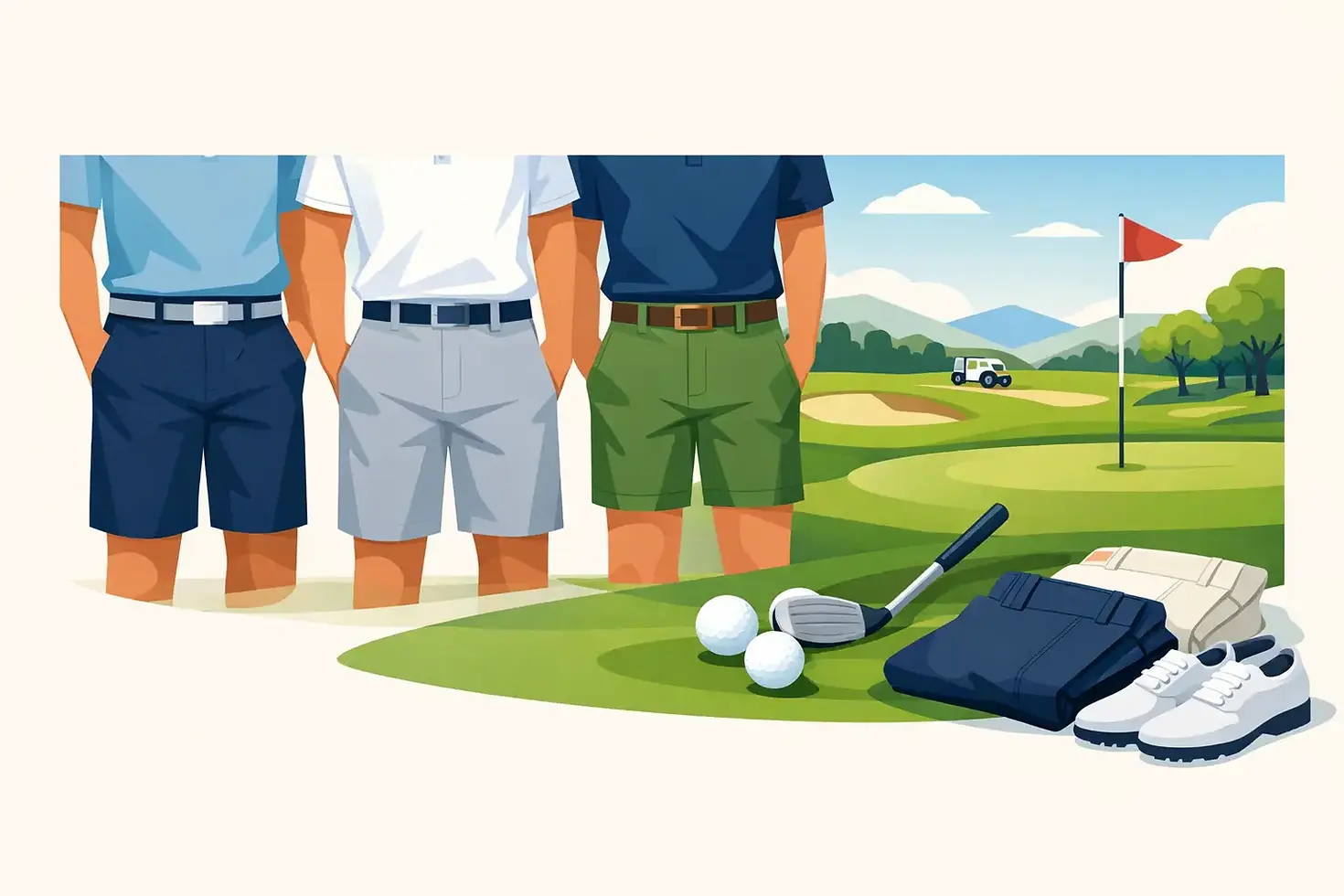
Colour also affects how the fit reads. Darker shades tend to look cleaner and more streamlined, while lighter colours can make every crease and pocket outline more noticeable. Neither is wrong, but if you are testing a new cut, a classic neutral is usually the low-risk play.
Small details that make a big difference
Pockets should lie flat when empty and remain usable when loaded with tees, markers and a scorecard. If they flare out at the hips, the shorts may be too tight through the seat or thigh. Check the zip and button as well - boring details until they are not.
Pay attention to the rise, which is the distance from the crotch seam to the waistband. A low rise can look sharp but may feel restrictive when you bend. A higher rise offers more coverage and stability, though too much can feel old-school. Most golfers are best served by a comfortable mid-rise that stays put through the swing.
Finally, trust the pair that makes you feel ready to play. The best fit should look intentional, move freely and leave you thinking about your next shot rather than your shorts. Find that balance, and you have one less excuse when the scorecard gets a bit ugly.


Comments